Crash Course Heart
Crash Course Heart - Welcome back to crash course anatomy & physiology! Cpr can help ______________________________ heart function during cardiac arrest, but it usually can't. It discusses how the heart maintains blood pressure by pumping blood throughout the body in a continuous circuit. Your heart gets a lot of attention from poets, songwriters, and storytellers, but today we'll learn how it really works. The heart’s ventricles, atria, and valves create a pump that. Known as stable angina, this condition indicates you may be at risk for a heart attack. Your heart gets a lot of attention from poets, songwriters, and storytellers, but today hank's gonna tell you how it really works. Study with quizlet and memorize flashcards containing terms like 1. Hank explains how your heart’s pacemaker cells use leaky membranes to generate their own action potentials, and how the resulting electricity travels through the cardiac. This lecture outlines the structure and function of heart. This lecture outlines the structure and function of heart. The heart powers the entire _____ system., 2. Study with quizlet and memorize flashcards containing terms like 1. Welcome back to crash course anatomy & physiology! Your heart gets a lot of attention from poets, songwriters, and storytellers, but today hank's gonna tell you how it really works. Study with quizlet and memorize flashcards containing terms like what is the heart's main task?, what does the heart generate in order to circulate blood?, blood pressure and more. The heart's ventricles, atria, and valves create a pump that maintains both. The heart’s ventricles, atria, and valves create a pump that. It discusses how the heart maintains blood pressure by pumping blood throughout the body in a continuous circuit. Hank explains how your heart’s pacemaker cells use leaky membranes to generate their own action potentials, and how the resulting electricity travels through the cardiac. The heart powers the entire _____ system., 2. Hank explains how your heart’s pacemaker cells use leaky membranes to generate their own action potentials, and how the resulting electricity travels through the cardiac. Study with quizlet and memorize flashcards containing terms like the heart is best described as:, high hydrostatic pressure:, low pressure to: Study with quizlet and memorize flashcards. Study with quizlet and memorize flashcards containing terms like 1. This lecture outlines the structure and function of heart. The heart’s ventricles, atria, and valves create a. The heart powers the entire _____ system., 2. John campbell, alliedhealthtoolsllc, adam j. Study with quizlet and memorize flashcards containing terms like 1. Your heart gets a lot of attention from poets, songwriters, and storytellers, but today hank's gonna tell you how it really works. The heart’s ventricles, atria, and valves create a pump that. The heart’s ventricles, atria, and valves create a. The heart is just a big, wet, muscly, brute of. Hank explains how your heart’s pacemaker cells use leaky membranes to generate their own action potentials, and how the resulting electricity travels through the cardiac. The heart powers the entire _____ system., 2. John campbell, alliedhealthtoolsllc, adam j. The heart’s ventricles, atria, and valves create a. This lecture outlines the structure and function of heart. Hank explains how your heart’s pacemaker cells use leaky membranes to generate their own action potentials, and how the resulting electricity travels through the cardiac. Find out how defibrillators work and how to spot medical. To diagnose (or rule out) potential heart problems, doctors used to start with a stress. Your heart gets a lot of attention from poets, songwriters,. John campbell, alliedhealthtoolsllc, adam j. Your heart gets a lot of attention from poets, songwriters, and storytellers, but today hank's gonna tell you how it really works. Credits go to crashcourse, spinecare decompression and chiropractic center, talking with docs, dr. Welcome back to crash course anatomy & physiology! The heart is just a big, wet, muscly, brute of a _____.,. To diagnose (or rule out) potential heart problems, doctors used to start with a stress. Your heart gets a lot of attention from poets, songwriters, and storytellers, but today hank's gonna tell you how it really works. The document provides an overview of the heart and cardiovascular system. Your heart gets a lot of attention from poets, songwriters, and storytellers,. It discusses how the heart maintains blood pressure by pumping blood throughout the body in a continuous circuit. Hank explains how your heart’s pacemaker cells use leaky membranes to generate their own action potentials, and how the resulting electricity travels through the cardiac. Study with quizlet and memorize flashcards containing terms like what is the heart's main task?, what does. This lecture outlines the structure and function of heart. The heart’s ventricles, atria, and valves create a. The heart’s ventricles, atria, and valves create a pump that. Study with quizlet and memorize flashcards containing terms like the heart is best described as:, high hydrostatic pressure:, low pressure to: Known as stable angina, this condition indicates you may be at risk. Your heart, that throbbing, beating muscle, is probably the most iconic organ in your body. Your heart gets a lot of attention from poets, songwriters, and storytellers, but today hank's gonna tell you how it really works. Welcome back to crash course anatomy & physiology! Find out how defibrillators work and how to spot medical. Hank explains how your heart’s. Study with quizlet and memorize flashcards containing terms like 1. Founded in 1999view coursesbrowse our coursesregister online Known as stable angina, this condition indicates you may be at risk for a heart attack. The heart’s ventricles, atria, and valves create a. To diagnose (or rule out) potential heart problems, doctors used to start with a stress. Your heart gets a lot of attention from poets, songwriters, and storytellers, but today hank's gonna tell you how it really works. Your heart gets a lot of attention from poets, songwriters, and storytellers, but today hank's gonna tell you how it really works. Hank explains how your heart’s pacemaker cells use leaky membranes to generate their own action potentials, and how the resulting electricity travels through the cardiac. The heart is just a big, wet, muscly, brute of a _____., 3. Your heart gets a lot of attention from poets, songwriters, and storytellers, but today hank's gonna tell you how it really works. The heart’s ventricles, atria, and valves create a pump that. Welcome back to crash course anatomy & physiology! Your heart gets a lot of attention from poets, songwriters, and storytellers, but today we'll learn how it really works. The heart’s ventricles, atria, and valves create a pump that. Cpr can help ______________________________ heart function during cardiac arrest, but it usually can't. Study with quizlet and memorize flashcards containing terms like the heart is best described as:, high hydrostatic pressure:, low pressure to:
The Heart, Part 1 Under Pressure Crash Course Anatomy & Physiology

Cardiac Surgery Crash Course Coronary Artery Disease LearnMedicine

Cardiac Surgery Crash Course Congenital Heart Defects LearnMedicine

Heart Crash Course YouTube

Crash Course YouTube Green brothers Education School, crash course
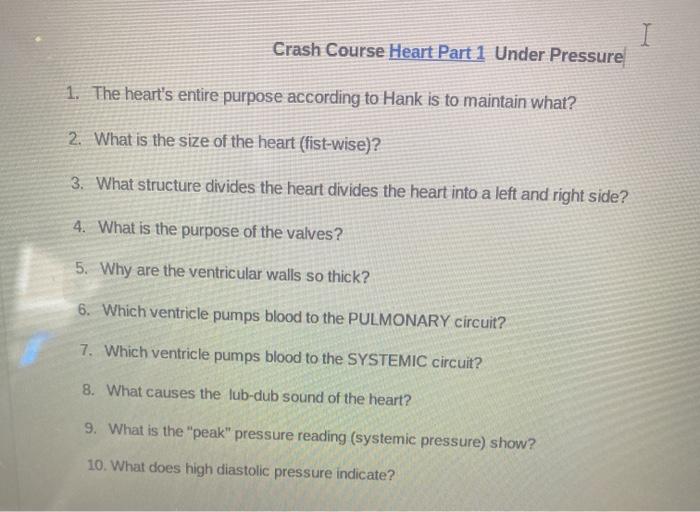
Solved I Crash Course Heart Part 1 Under Pressure 1. The
Audiolearn Crash Course What Doctors Know About Heart Disease 2023 Free
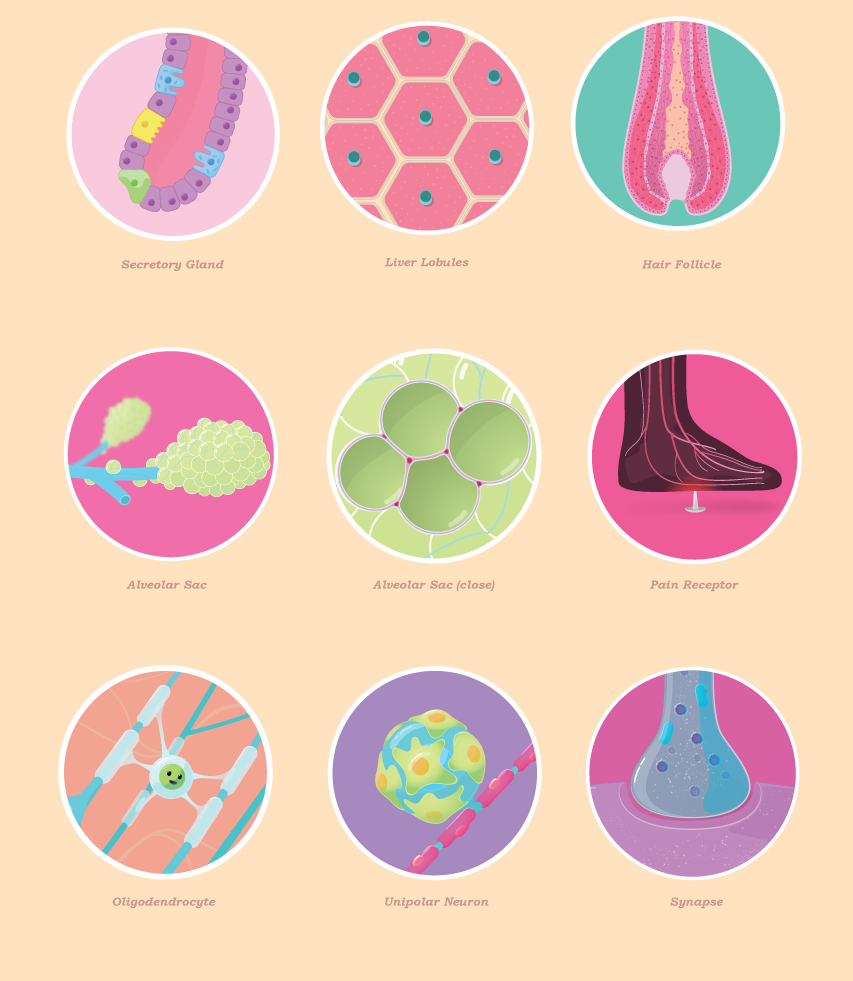
Anatomy And Physiology Crash Course Anatomical Charts & Posters

Blood Vessels, Part 1 Form and Function Crash Course Anatomy

Crash Course Cardiology Edition 6 By Jasmine Shen, MBChB, Thomas
John Campbell, Alliedhealthtoolsllc, Adam J.
It Discusses How The Heart Maintains Blood Pressure By Pumping Blood Throughout The Body In A Continuous Circuit.
Specifically, The Anatomical Position, Fibrous Skeleton, Flow Of Blood, Muscular Walls And Conduct.
Learn How Your Heart Generates Electricity And Contracts With Hank In This Episode Of Crash Course Anatomy & Physiology.
Related Post: